
Most Dangerous Areas in London: Where to Be Extra Cautious 2026
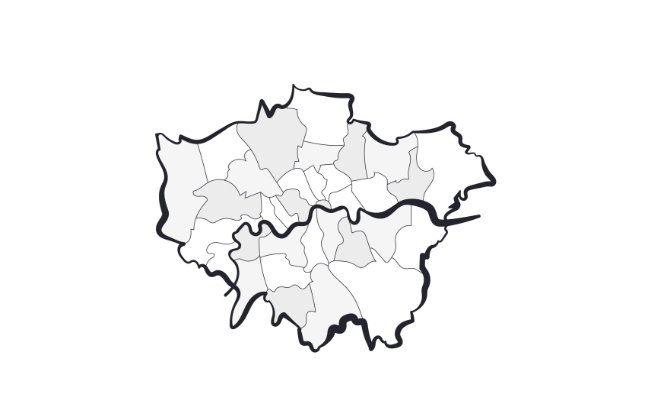
London is generally a safe city, but crime levels vary significantly between boroughs. According to the latest Office for National Statistics (ONS) data, boroughs such as Westminster, Camden, Southwark, Croydon, and Lambeth consistently record some of the highest levels of police-recorded crime. However, the "most dangerous" area depends on how crime is measured, with central London reporting more theft and robbery, while residential boroughs tend to experience higher levels of burglary, vehicle crime, and violent offences.
This guide compares London's highest-crime boroughs using the latest official statistics, explains the factors behind local crime patterns, identifies the most common offences and hotspots, and provides practical safety advice for residents and visitors.
Top 10 Most Dangerous Areas in London
Crime doesn’t hit every part of London the same. Some areas deal with more trouble, and that makes them riskier. Below are the top 10 most dangerous areas in London. Each one has higher theft, violence, and rude behavior. This list shows you the roughest part and worst areas in London and explains why they stand out.
1. Lambeth
Crime rate: 132 crimes per 1,000 residents
Most common crimes: Violent crime, sexual offences and robbery
Key hotspots: Brixton and Vauxhall
Crime insight: Lambeth records one of the highest crime rates in London, with more than 10,000 violent offences reported in 2025. Violent crime remains the borough's primary concern, while gang-related incidents and late-night offences continue to contribute to overall crime levels.
Who should be cautious: Residents, commuters and visitors in busy nightlife areas
Safety takeaway: Stay on well-lit streets after dark and remain alert around transport hubs and entertainment districts.
2. Croydon
Crime rate: 132.7 crimes per 1,000 residents
Most common crimes: Violent crime, knife crime and drug-related offences
Key hotspots: Croydon Town Centre
Crime insight: Croydon has one of the highest recorded crime rates in South London. Violent offences, knife crime and drug-related incidents remain the borough's most significant public safety challenges, making it one of the highest-risk boroughs in this ranking.
Who should be cautious: Residents, commuters and late-night visitors
Safety takeaway: Avoid isolated streets at night and remain aware of your surroundings near transport interchanges.
3. Haringey
Crime rate: 100 crimes per 1,000 residents
Most common crimes: Robbery and violent crime
Key hotspots: Tottenham and Wood Green
Crime insight: Haringey reports around 100 crimes per 1,000 residents. Robbery and violent offences are concentrated in busy commercial areas, with Tottenham and Wood Green recording a relatively high number of police reports compared with quieter residential neighbourhoods.
Who should be cautious: Shoppers, commuters and evening visitors
Safety takeaway: Keep valuables out of sight and stay alert around shopping centres and transport stations.
4. Tower Hamlets
Crime rate: 99 crimes per 1,000 residents
Most common crimes: Robbery, theft and burglary
Key hotspots: Whitechapel and Bethnal Green
Crime insight: Tower Hamlets records one of the higher crime rates in London, with 99 crimes per 1,000 residents. Robbery and theft have increased in recent years, while burglary remains a recurring concern. Busy commercial streets and transport links contribute to a higher volume of reported offences than many residential boroughs.
Who should be cautious: Residents, commuters and visitors using busy public transport routes
Safety takeaway: Stay alert in crowded areas, keep valuables out of sight, and avoid displaying phones or wallets near transport hubs.
5. Hackney
Crime rate: 93 crimes per 1,000 residents
Most common crimes: Theft and violent crime
Key hotspots: Shoreditch, Dalston and Broadway Market
Crime insight: Hackney reports 93 crimes per 1,000 residents, placing it among London's higher-crime boroughs. Popular nightlife, entertainment venues and weekend markets attract large crowds, contributing to higher levels of theft and violent crime in busy districts.
Who should be cautious: Nightlife visitors, commuters and tourists
Safety takeaway: Remain aware of your surroundings after dark and keep personal belongings secure in busy entertainment areas.
6. Southwark
Crime rate: 88 crimes per 1,000 residents
Most common crimes: Theft and violent crime
Key hotspots: Elephant and Castle
Crime insight: Southwark records 88 crimes per 1,000 residents. Theft and violent crime remain the borough's most commonly reported offences, particularly in high-footfall locations such as Elephant and Castle, where heavy pedestrian traffic contributes to more recorded incidents.
Who should be cautious: Commuters, shoppers and evening visitors
Safety takeaway: Stay vigilant around transport interchanges and avoid walking alone in unfamiliar areas late at night.
7. Newham
Crime rate: Approximately 84–85 crimes per 1,000 residents
Most common crimes: Theft and violent crime
Key hotspots: Stratford and West Ham
Crime insight: Newham reports approximately 84–85 crimes per 1,000 residents. Busy transport hubs, particularly around Stratford Station, experience frequent reports of theft and pickpocketing, while violent crime also contributes significantly to the borough's overall crime rate.
Who should be cautious: Commuters, shoppers and visitors using Stratford transport links
Safety takeaway: Keep bags zipped, avoid leaving valuables unattended, and stay alert in crowded stations and shopping areas.
8. Camden
Crime rate: Around 80 crimes per 1,000 residents
Most common crimes: Theft and drug-related offences
Key hotspots: Camden Market and Camden Town
Crime insight: Camden records around 80 crimes per 1,000 residents. The borough's popular markets, music venues and nightlife attract large numbers of visitors, contributing to higher levels of theft, while drug-related offences remain a continuing public safety concern.
Who should be cautious: Tourists, students and nightlife visitors
Safety takeaway: Be extra cautious in crowded markets and entertainment districts, particularly during evenings and weekends.
9. Westminster
Crime rate: Approximately 78 crimes per 1,000 residents
Most common crimes: Theft from the person, shoplifting and robbery
Key hotspots: Big Ben, Buckingham Palace and surrounding tourist areas
Crime insight: Westminster reports approximately 78 crimes per 1,000 residents. Although its resident population is relatively small, the borough attracts millions of visitors each year. High tourist footfall contributes to frequent reports of pickpocketing, shoplifting and robbery around major attractions.
Who should be cautious: Tourists, commuters and first-time visitors
Safety takeaway: Keep phones and valuables concealed in crowded tourist attractions, shopping streets and public transport areas.
10. Islington
Crime rate: Around 75 crimes per 1,000 residents
Most common crimes: Theft and violent offences
Key hotspots: Angel and Upper Street
Crime insight: Islington records around 75 crimes per 1,000 residents. Theft and violent offences are concentrated in busy commercial areas such as Angel and Upper Street, where restaurants, bars and retail activity generate higher levels of reported crime than quieter residential neighbourhoods.
Who should be cautious: Residents, shoppers and evening visitors
Safety takeaway: Stay aware of your surroundings after dark and keep personal belongings secure in busy shopping and dining districts.
Note: In areas with higher crime rates, many residents rely on security cameras with real-time alerts and motion detection to better monitor their surroundings and reduce risks such as break-ins or package theft.

Smart 2K Solar Floodlight Security Camera
150° Ultra-Wide View, 2K 4MP HD Resolution, AI-Based Adaptive Floodlight, Endless Power with Reolink SolarEase™.
Crime Types in London
According to the latest data from the Metropolitan Police Service and detailed trend analysis from the Office for National Statistics (ONS), while certain crime categories have stabilized, high-volume offences like violence and theft continue to impact London's residential areas. These figures, further supported by real-time tracking from Plumplot London, highlight why a robust, wired CCTV system is a necessary layer of protection against the most prevalent urban threats.
The following table outlines the reported incident volumes in London by category:
How Safe Is London? Crime Rates by Area
Safety in London depends on where you stand. Crime hits worst places harder. This section splits it by East, West, North, and South London. It shows the toughest spots with common crimes and rates. Rates here count crimes per 1,000 people.
East London
East London has Hackney, Tower Hamlets, and Newham. It tops the city for crime. Violence strikes about 30 times per 1,000 people. Theft and rude acts thrive in busy places like Stratford. Over 50,000 crimes might occur yearly. It’s a risky region and can be considered as the worst part of london.
West London
West London covers Hammersmith, Fulham, Kensington, and Chelsea. It has less crime than East, at about 80 per 1,000 people. Theft and break-ins rule, especially in rich zones with pricey stuff. Violence shows up less but hits spots like Shepherd’s Bush. It’s safer than some, but stay sharp.
North London
North London includes Islington, Camden, and Haringey. It sees around 90 crimes per 1,000 people. Violence and robberies spike in Tottenham and Finsbury Park. Knife crime and gangs bug some areas. Parts feel safe, but others rank high for danger.
South London
South London holds Southwark, Lambeth, and Croydon. It logs about 95 crimes per 1,000 people. Violence grows, and Croydon leads with knife issues. Assaults and robberies hit busy zones. Safer spots like Richmond pull the average down. It mixes high and low crime.
How We Determine the Most Dangerous Areas in London?
To identify London's most dangerous areas, we analyzed the latest publicly available crime data from the Metropolitan Police, the Office for National Statistics (ONS), the London Datastore, and other official UK government crime statistics.
Our rankings are primarily based on the number of recorded crimes per 1,000 residents, which provides a standardized way to compare boroughs with different population sizes. In addition to overall crime rates, we also considered the prevalence of key offence categories, including:
- Violent crime
- Robbery
- Burglary
- Theft
- Vehicle crime
- Anti-social behaviour
It's important to understand that no single metric can fully define how "dangerous" an area is. For example, central boroughs such as Westminster attract millions of commuters, shoppers, and tourists every year. Since crime rates are typically calculated using the resident population, these boroughs may report significantly higher crime rates than primarily residential areas.
For this reason, this guide should be viewed as a practical reference for understanding crime trends across London rather than a definitive measure of personal safety. Many neighborhoods within higher-ranking boroughs remain safe, while lower-crime boroughs can still experience localized incidents.
Data Sources: Metropolitan Police Service, Office for National Statistics (ONS), London Datastore, and UK Government crime statistics.
Check Crime by London Postcode
Borough-wide crime rates provide a useful overview, but crime levels can vary significantly between neighbourhoods. Checking crime by postcode gives a more accurate picture of local safety.
With the Reolink Postcode Crime Checker, you can:
- Check crime levels for a specific postcode
- View the most common local crime types
- Compare nearby areas before moving, buying, or travelling
Check your postcode: Reolink Postcode Crime Checker
How to Stay Safe in Worst Parts of London?
Knowing risky spots helps. Staying safe matters just as much. Here are tips for living in or visiting the most dangerous parts of London. They cut your chances of trouble.
1. Stay Alert and "Phones Down"
Keep your eyes peeled, especially in crowds or near busy junctions where phone snatching is common.
- Eye Contact: Walking with purpose and staying off your phone makes you look less like an easy target.
- Safe Checks: If you must check a map, step into a shop or a well-lit doorway first rather than stopping on a street corner.
2. Secure Your "Home Base" with Reliable Tech
For residents, basic locks are no longer enough. Modern security requires a multi-layered approach:
- Wired CCTV Systems: Unlike battery-operated cameras, wired systems offer a stable, unjammable connection, ensuring you capture every detail in 4K resolution.

4K UHD Wi-Fi 6 Security System with 180° Blindspot-Free View
ColorX Night Vision, 1 Year of Local Storage, Exclusive Anti-Theft Algorithms, 180° Blindspot-Free Coverage, Expandable System Up to 8 Reolink Cams.
- Video Doorbells: These are essential for preventing "parcel pinching" and allow you to screen callers safely from your phone.

2K Battery Wi-Fi Video Doorbell with Smart Detection
- 2K 4MP Head-to-Toe View
- Person/Vehicle/Animal/Package Detection
- 300-Day Lasting Battery Life
- No Monthly Fees for Local Storage
- Smart Alarms: Use motion sensors to alert you and your neighbours to any breach the moment it happens.
3. Stick to Well-Lit Routes and Smart Transport
Avoid quiet backstreets or parks after dark. Stick to main roads with active street lighting and visible surveillance.
- Licensed Travel: Use licensed black cabs or tracking-enabled apps like Uber.
- Public Transport: On trains or buses, sit in busier carriages or near the driver to ensure you are never isolated.
4. Protect Your Personal "Tech" and Vehicles
Phones, laptops, and bikes are top targets in London.
- For Tech: Enable "Find My" features and keep valuables in zipped internal pockets.
- For Vehicles: Use a Faraday bag to block keyless entry signals from being cloned. Always park under the watchful eye of a CCTV camera or bright streetlights to discourage break-ins.
5. Trust Your Instincts
If a street feels too quiet or a situation feels "off," don't wait for trouble to find you—move to a crowded, well-lit area immediately. Your gut instinct, combined with the presence of visible security technology, is your best defense in high-risk zones.
FAQs
Which Part of London Has the Most Crime?
Westminster tops London for crime. Tourists swarm it, so pickpocketing and small thefts boom. Violent crime sneaks in, too. However, the efforts have been made by the local police department to minimize these crimes.
What’s the Roughest Area in the UK?
London has rough patches. But Glasgow in Scotland often takes the crown for the UK. It's violent crime beats most London spots. Among the violent crimes, petty thefts are most common especially out on the streets and then follows the property theft.
Where Are the Most Stabbings in London?
Croydon and Hackney see the most stabbings. Knife crime jumps there, often tied to gangs. It is advised to people and tourists to not visit those areas alone after midnight. Moreover, the police department is actively engaged to deal with those knife stabbing crimes in Croydon and Hackney.
Where not to travel in London?
Oxford Street, Regent Street, and the West End are hotspots for professional pickpockets and moped-based phone snatching, while the crowded nightlife of Leicester Square, Piccadilly Circus, and Soho requires extra vigilance against "dip" thefts in bars and markets like Camden.
What's the poorest area in London?
In terms of the poverty rate after housing costs, Tower Hamlets is the poorest borough in London, with around 40% of residents living in poverty. If measured by the lowest average household income, Brent ranks as the poorest.
Conclusion
London blends safe and risky zones. Hackney, Tower Hamlets, and Croydon top the danger list. East and South London face more crime, and tourist hubs like Westminster add risk too. Stay sharp and use safety tips to stay secure. Share your thoughts or stories below to help others get to know London’s safety.
Search
Subscribe for the Latest Updates
Security insights & offers right into your inbox