
Driveway Security Cameras Buying Guide 2026: How to Choose the Right Camera for Your Home

The best driveway security camera depends on your specific setup—namely, how you power the camera, the distance to your Wi-Fi, and whether you need to cover a tight garage door or a long gated entrance. There is no single "best" camera for every property; a compact suburban driveway requires completely different coverage, night vision, and motion detection specs than a remote 200-foot rural driveway.
To help you make an informed decision without paying for features you don't need, this guide breaks down the essential criteria for evaluating driveway cameras. We’ll cover key factors like video resolution, color vs. infrared night vision, AI vehicle detection, viewing angles, and power options. Finally, we rank the top scenario-driven security systems—spanning wireless, Power over Ethernet (PoE), solar, and long-range setups—so you can easily match the right camera to your budget and layout.
- What Is a Driveway Security Camera and How Does It Work?
- Why Install a Security Camera for Driveway?
- What Are Common Types of Driveway Cameras?
- 4 Key Features to Consider When Choosing the Best Driveway Security Camera
- 3 Top Picks: Best Driveway Security Cameras for Different Setups
- Where Should You Mount a Driveway Security Camera?
- Real-World Problems Homeowners Face with Driveway Cameras
- Buyer Decision Table: How to Choose Your Driveway Security Setup
- FAQs on Driveway Cameras
- Conclusion
What Is a Driveway Security Camera and How Does It Work?
A driveway security camera is an outdoor surveillance camera specifically configured to monitor vehicle entry points, garages, gates, and parked cars. Unlike standard front-door cameras, driveway security cameras are optimized with wider viewing angles, long-range motion detection, and specialized night vision to capture high-speed movement and license plates from a distance.
How Do Driveway Security Cameras Work?
Driveway security cameras work by combining image sensors, optical lenses, and motion detection software to continuously monitor activity. Here is a breakdown of how they operate:
-
Detection & Triggering: Built-in motion sensors (such as PIR heat sensors or AI image processing) detect movement near the driveway. Advanced models use AI algorithms to distinguish between vehicles, people, animals, and moving tree branches to prevent false alarms.
-
Recording & Alerts: Once motion is detected, the camera immediately begins recording video footage and pushes a real-time notification to your smartphone or security system.
-
Data Transmission & Power: Cameras transmit video and receive power primarily through three methods: PoE, Wi-Fi, and cellular networks.
Why Install a Security Camera for Driveway?
A driveway security camera serves as your property's perimeter baseline, securing the primary pathway used by vehicles, visitors, and potential intruders. Securing your driveway provides actionable, early-warning alerts before an intruder reaches your front door or garage.
1. Prevent Car Theft, Vandalism, and Vehicle Break-ins
Visible driveway cameras deter vehicle crimes by creating immediate accountability and capturing critical forensic evidence. Driveways are primary targets for auto theft, catalytic converter theft, and car prowling—especially overnight.
2. Streamline Visitor and Delivery Monitoring
Driveway cameras track incoming traffic in real time, so you can control over package drops and guest access before anyone sets foot on your porch.
3. Maintain Low-Light and Nighttime Perimeter Defense
Nighttime driveway coverage eliminates dark blind spots around garages, gates, and parked vehicles where standard lighting falls short.
What Are Common Types of Driveway Cameras?
Driveway cameras fall into five primary categories based on their power source, data connection, and alert mechanisms. Selecting the right type depends on your driveway length, access to power outlets, and Wi-Fi signal strength at the perimeter.
1. Driveway Alarms with Cameras (Active Early-Warning Systems)
A driveway alarm with a camera pairs physical motion/vehicle detection with real-time video verification to act as an immediate perimeter warning system. Unlike passive security cameras that quietly record footage, these hybrid systems actively alert you—via an indoor chime, loud outdoor siren, or instant mobile notification—the moment a vehicle or intruder crosses your driveway boundary.
Best Used for: Perimeter early warning for vehicles & intruders.
2. Battery & Solar-Powered Wireless Cameras
Battery and solar security cameras run completely wire-free, making them ideal for standard residential driveways, rental properties, and locations without nearby electrical wiring.
Best Used For: Driveways within strong Wi-Fi range where drilling through exterior walls is undesirable.
3. Power over Ethernet (PoE) Wired Cameras
PoE security cameras transmit both high-speed data and electrical power through a single Ethernet cable (Cat5e/Cat6), offering maximum reliability.
Best Used For: Homeowners seeking a permanent, commercial-grade security setup covering multi-car driveways and garages.
4. Long-Range Cellular (4G LTE) Cameras
Cellular driveway cameras operate independently of home Wi-Fi networks by transmitting video data over 4G/5G cellular networks. Combined with a small solar panel, cellular cameras function completely off-grid.
Best Used For: Ideal for long rural driveways, remote gate entrances, farms, and construction sites hundreds of feet away from the main house.
4 Key Features to Consider When Choosing the Best Driveway Security Camera
To effectively monitor perimeter traffic, prevent vehicle break-ins, and capture sharp forensic details, your driveway security camera must meet specific baseline criteria. Evaluating these four core features ensures your camera performs reliably in real-world outdoor conditions without sending constant false alarms or failing when you need critical footage.
1. Weatherproofing (IP65 vs. IP66 Ingress Ratings)
Outdoor driveway cameras must feature an IP65 or IP66 rating to survive extreme rain, snow, heat, and direct water exposure. Standard indoor cameras lack environmental seals and will degrade quickly if mounted near a garage or front gate.
-
IP65 Rating: Protects against dust and light-to-moderate rain jets. Suitable for sheltered garage walls, covered porches, and eaves.
-
IP66 Rating: Offers a completely dust-tight enclosure that withstands powerful, high-pressure water jets and heavy downpours. Essential for open fence posts, long driveway gates, or locations exposed to garden hoses.
2. Specialized Long-Range & Color Night Vision
Nighttime driveway footage requires a combination of long-range infrared (IR) LEDs and large-aperture color sensors to identify license plates and faces in total darkness.
-
Infrared (IR) Night Vision: Uses 850nm or 940nm IR LEDs to produce crisp black-and-white video in complete darkness. Look for a minimum illumination range of 100ft (30 meters) to cover long driveways.
-
Color Night Vision: Employs large optical sensors and spotlight integration to capture full-color footage in low-light conditions. Full-color video is crucial for identifying vehicle paint colors, clothing shades, and hair color after dark.
-
Motion-Activated Floodlight Cameras: Combines high-lumen LED lights with image sensors. When motion is detected, the lights illuminate the driveway, scaring off potential intruders while capturing bright color footage.
A customer who bought Reolink infrared security camera shared a video how this camera stopped a car break-in. You can watch the below video below.
3. Ultra-High Resolution (4K to Dual-Lens 16MP)
For long or multi-car driveways, resolution dictates how far you can digitally zoom in on a recorded video before pixels break down. Higher pixel density provides the necessary clarity to read license plate characters and distinguish facial features.
-
2K (4MP): Standard resolution for short suburban driveways ($15\text{ ft}$–$30\text{ ft}$ from the camera).
-
4K (8MP / 3840x2160): The recommended baseline for most residential driveways. Provides enough pixel detail to zoom in on vehicle license plates and far-away entry points.
-
16MP Dual-Lens Ultra-Wide: Combines two image sensors into a seamless, ultra-wide field of view. Ideal for multi-garage layouts or wide gates, maintaining sharp focus across broad perimeter angles without distorting the edges.
Storage Tip: Higher video resolution creates larger file sizes. Ensure your camera utilizes efficient H.265 (HEVC) video compression to save up to 50% on storage space and network bandwidth compared to older H.264 formats.
4. Off-Grid Connectivity Options (No Wi-Fi or Power Needed)
Driveways far from the main residence can still maintain 24/7 surveillance through dedicated local NVR networks or cellular technology.
If your driveway lacks a Wi-Fi signal or electrical outlets, consider these two solutions:
-
Standalone NVR Systems (No Internet Required): Hardwired Power over Ethernet (PoE) cameras plug directly into a central Network Video Recorder (NVR). The system creates its own closed local network to record 24/7 footage directly to an internal hard drive without needing home Wi-Fi or an internet subscription.
-
4G LTE Cellular + Solar Cameras (No Power or Wi-Fi): Uses a built-in SIM card to transmit alerts and live video over cellular networks. Paired with a small solar panel, these cameras operate entirely off-grid, making them ideal for rural gates, farm entrances, or long country drives hundreds of feet from the router.
3 Top Picks: Best Driveway Security Cameras for Different Setups
Choosing the right driveway camera comes down to matching your camera’s power and connectivity to your property’s physical layout. Below are three top-rated, scenario-driven camera recommendations designed for different needs—spanning wired Power over Ethernet (PoE), off-grid 4G cellular, and smart wireless pan-and-tilt systems.
Pick 1: Reolink OMVI 3i PoE Camera (Best for Stable, Continuous Wired Protection)
You have a busy suburban driveway or garage facing street traffic, and you need reliable 24/7 continuous recording without worrying about battery drain or Wi-Fi interference.
The Reolink OMVI 3i relies on Power over Ethernet (PoE). A single Cat5e or Cat6 cable delivers both high-speed data and constant electrical power, supporting an ultra-sharp 18MP image sensor that captures fine details like license plate numbers and other distant details. Because it connects directly to a hardwired network or local NVR, it records 24/7 without buffering or missing motion events.
Best Applications:
-
High-Traffic Suburban Driveways: Properties where constant motion triggers would drain battery-powered cameras too quickly.
-
Garage & Front-Gate Overlooks: Ideal for mounting under eaves or on garage overhangs to record continuous footage of incoming vehicles and package deliveries.
-
Maintenance-Free Setups: Perfect for homeowners who want a permanent "set-it-and-forget-it" system with zero batteries to recharge.
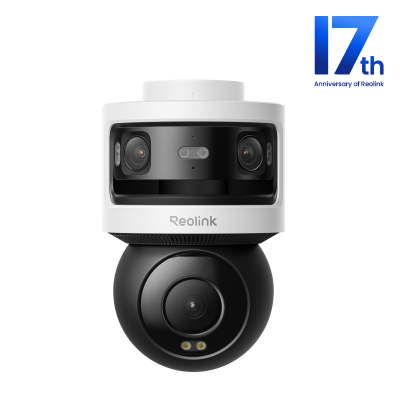
All-in-one Triple-Lens 180° Panoramic Pan-Tilt Security Camera
10MP Dual-Lens 180° View, 4K 360° Full Coverage, SyncTrack with auto framing & auto tracking, Local Storage (No Monthly Fees), Local AI Video Search.
Pick 2: Reolink Go PT Ultra (Best for Remote or Off-Grid Driveways)
Your driveway is far from the main house—such as a farm gate, ranch entrance, or long country driveway—where Wi-Fi signals cannot reach and running power cables is too expensive.
The Reolink Go PT Ultra operates completely wire-free by combining a 4G LTE cellular data connection with a solar panel and battery power system. It features full 360-degree pan-and-tilt capability to eliminate blind spots across remote fields or property lines, sending immediate AI motion alerts directly to your phone without requiring a local router.
Best Applications:
-
Long Rural Driveways & Gates: Locations away from the main residence where Wi-Fi drops out.
-
Vacation Homes, Cabins & Farms: Monitoring remote gates, utility sheds, machinery, or long gravel drives lacking power outlets.
-
Equipment & Trailer Storage: Securing parked boat trailers, RVs, or construction equipment on open perimeter land.
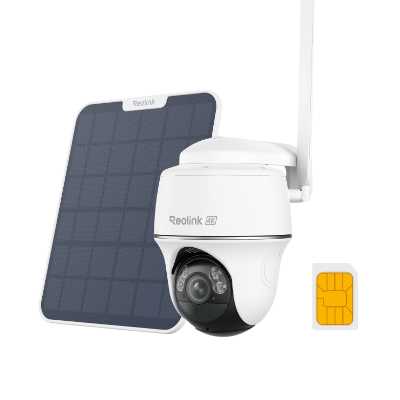
4K 8MP Wire-Free 4G LTE PT Battery Camera
4K 8MP; Smart Detection; 355° Pan & 140° Tilt; Battery/Solar Powered; Color Night Vision; Smart Real-Time Alert.
Pick 3: Reolink Argus PT Ultra + Home Hub (Best Smart Wireless System)
You want a flexible, wire-free driveway camera that can rotate to cover multiple angles (such as both a garage door and a side gate), but you also want centralized local video storage without monthly subscription fees.
This wireless setup combines a 4K battery/solar pan-and-tilt camera with a dedicated Home Hub. Powered by Wi-Fi 6 technology, the system delivers smooth live streaming and long-range wireless stability. The camera rotates horizontally and vertically via your phone app, while the indoor Home Hub safely stores all 4K recordings locally—giving you smart control with zero monthly costs.
Best Applications:
-
Wide or Curved Driveways: Allows you to pan across sweeping driveways, side yards, and parking areas with a single camera.
-
Multi-Point Intrances: Properties where one camera needs to cover the driveway entrance, front porch, and garage simultaneously.
-
Privacy-Conscious Homes: Families who want responsive app controls, smart vehicle detection, and encrypted local storage under one roof.
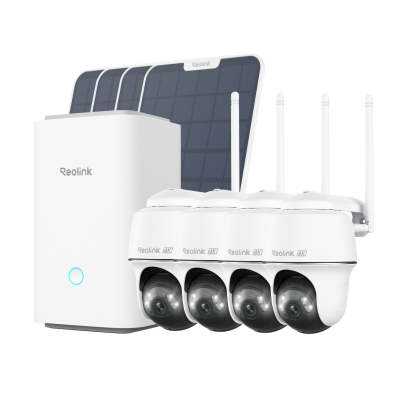
Wireless Security System With 4K PT Standalone Battery/Solar Wi-Fi Cameras
4K Color Footage Day & Night, 1 Year of Local Storage, Exclusive Anti-Theft Algorithms, 360° All-Around Coverage, Expandable System Up to 8 Reolink Cams.
Where Should You Mount a Driveway Security Camera?
Proper camera placement is essential for getting clear footage, reducing blind spots, and maximizing the effectiveness of your driveway security camera. A well-positioned camera can help you capture faces, vehicles, and suspicious activity more accurately while improving overall home security coverage.
Above the Garage or Driveway Entrance
One of the best locations for a driveway surveillance camera is above the garage door or near the driveway entrance. This position provides a wide viewing angle and allows the camera to monitor vehicles entering or leaving your property.
Mounting the camera higher also makes it more difficult for intruders to tamper with or disable the device. For most homes, installing the camera about 8–10 feet above the ground offers a good balance between visibility and detail.
Best for:
- Monitoring parked cars
- Capturing visitors approaching the home
- Watching garage entrances and gates
Adjust the Angle for License Plate Visibility
If your goal is to identify vehicles, angle the camera toward the driveway so it can clearly capture license plates and vehicle movement. A slightly downward-facing angle often produces better detail than positioning the camera straight ahead.
For longer driveways, a camera with optical zoom or telephoto capability can help maintain image clarity at greater distances.
Placement tips:
- Avoid pointing directly at headlights
- Position the camera to capture vehicles slowing down or stopping
- Test footage both during the day and at night
Avoid Blind Spots and Sun Glare
Blind spots can leave important areas of your driveway unmonitored. Before final installation, check the camera’s field of view and ensure all entry points are visible.
You should also avoid placing cameras where direct sunlight, reflections, or bright headlights can create glare and reduce image quality. Positioning the camera slightly sideways instead of directly facing the street often improves visibility.
Common blind spot areas:
- Corners near fences or hedges
- Areas beside parked vehicles
- Side garage entrances and pathways
Choose a Weather-Protected Position
Since driveway cameras are exposed to outdoor conditions year-round, choose a location with some natural protection from heavy rain, snow, and direct sunlight. Installing the camera under an eave or roof overhang can help extend its lifespan and maintain clearer footage during bad weather.
For areas with extreme climates, look for cameras with a durable weatherproof IP rating such as IP65 or IP66.
Best practices:
- Keep cameras away from sprinklers and heavy water exposure
- Ensure stable mounting to reduce vibration from wind
- Regularly clean the lens for optimal image quality
Real-World Problems Homeowners Face with Driveway Cameras
Reddit discussions show that people searching for “best driveway security camera” are not only comparing camera brands. They are trying to solve specific real-world problems:
1. Preventing driveway theft and vandalism
- Users are motivated by incidents such as vehicle break-ins, property damage, or suspicious activity.
2. Capturing usable evidence, not just recording motion
A major hidden concern is whether a camera can actually identify someone.
Users specifically questioned:
- Can it capture faces?
- Can it read license plates?
- Will night footage be useful?
- Is the camera angle correct?
3. Choosing between wireless convenience and wired reliability
A recurring buying dilemma:
- Wireless cameras are easier to install.
- Wired PoE systems are preferred for reliability and continuous recording.
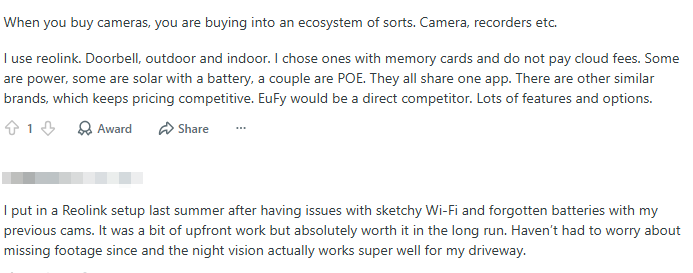
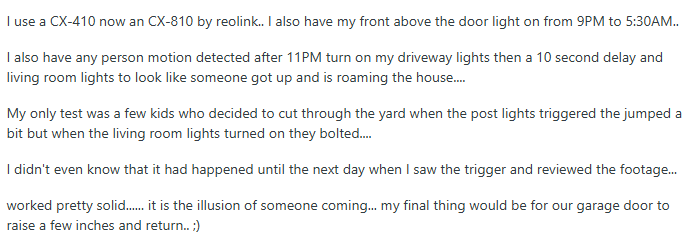
Reolink was mentioned positively in Reddit thread, where users discussed choosing Reolink systems because of local storage options, multiple power options, shared app experience, and avoiding cloud fees. Another commenter described switching to a Reolink setup after reliability issues with previous cameras and reported satisfaction with driveway night performance.
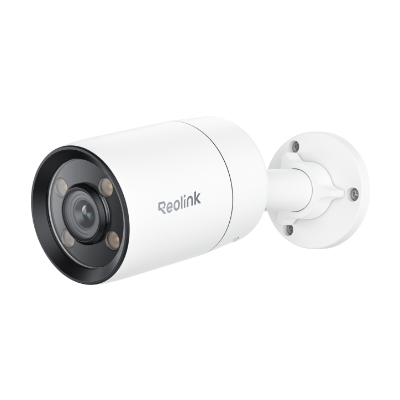
2K PoE ColorX Night Vision Camera
👍 2K 4MP video with image sensor
👍 ColorX night vision with F1.0 aperture
👍 Adjustable warm light
👍 PoE connection for reliable performance
Buyer Decision Table: How to Choose Your Driveway Security Setup
To help bring further clarity to what’s best for your home, we created this comparison framework so you can quickly sort through options and choose with confidence.
FAQs on Driveway Cameras
Can my neighbor have a camera pointed at my driveway?
In many places, neighbors can legally use security cameras that capture areas visible from their property, including parts of your driveway. However, cameras generally should not invade private spaces like inside your home or windows.
How do I monitor my driveway?
You can monitor your driveway with a driveway security camera that offers live view, motion alerts, and night vision. Install the camera above the garage or driveway entrance for the best coverage.
Can you have a camera in your driveway facing a street?
Yes, most homeowners can install a driveway camera facing the street to monitor vehicles and activity near their property. Just avoid pointing the camera directly into private areas like neighbors’ windows.
Conclusion
A reliable driveway security camera can significantly improve your home security by helping you monitor vehicles, visitors, deliveries, and suspicious activity around your property. When choosing a driveway surveillance system, focus on important features like high video resolution, smart motion detection, night vision, weather resistance, and local storage options.
If you have any questions or insights about driveway cameras you wanna share with us, leave them in the comment below!
Search
Subscribe for the Latest Updates
Security insights & offers right into your inbox