
Best Cold Weather Security Cameras 2026: Top Picks & Winter Guide
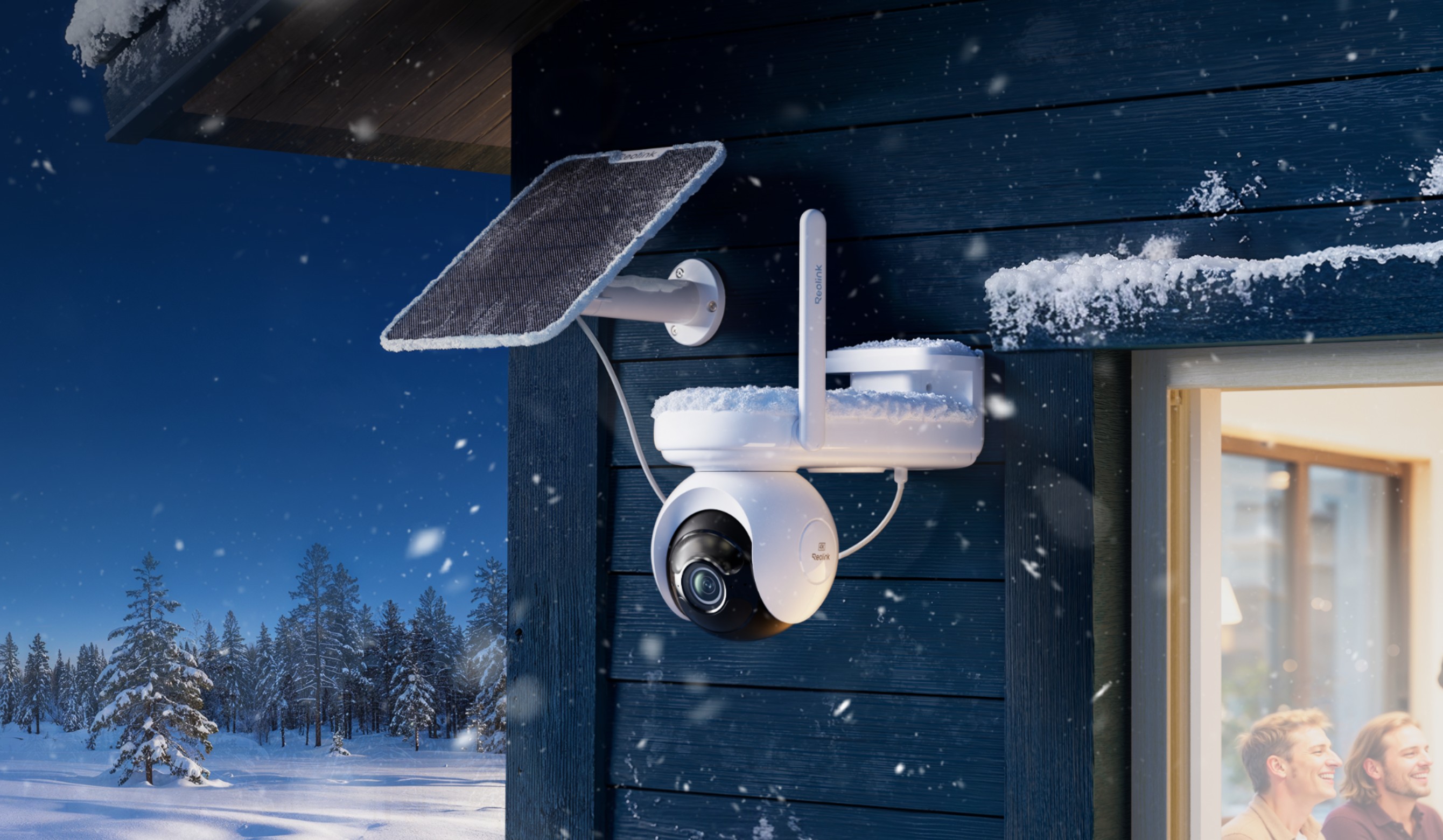
Winter can be tough on outdoor security cameras. Freezing temperatures, snow, ice, and shorter daylight hours can cause battery drain, connection issues, and unclear footage when you need protection the most. As more homeowners rely on year-round outdoor surveillance, choosing a reliable cold weather security camera has become essential for keeping properties safe in harsh winter conditions.
In this complete buying guide, we’ll walk you through the key factors to consider when choosing the best security cameras for cold weather, from temperature resistance and power options to image quality and reliability. We’ll also share top-rated extreme cold weather CCTV cameras and systems trusted by user.
- How Does Cold Weather Affect Security Cameras?
- What Are Common Types of Cold Weather Security Cameras?
- 3 Key Features to Look for in a Cold Weather Security Camera
- 3 Best Cold Weather Security Cameras for Different Scenarios
- Common Mistakes to Avoid When Buying Security Cameras for Cold Weather
- Real-World User Opinions on Outdoor Security Cameras for Cold Weather
- Buyer's Decision Guide
- How Do You Keep Your Reolink Batteries Charged in Cold Weather?
- FAQs about Cold Weather Security Cameras & Systems
- Conclusion
How Does Cold Weather Affect Security Cameras?
Cold weather can reduce the performance of outdoor security cameras in several ways. Freezing temperatures, snow, ice, and moisture may affect battery life, image quality, motion detection, and wireless connectivity. Understanding these winter challenges can help you choose a reliable cold weather security camera that keeps working when you need protection the most.
Shorter Battery Life in Freezing Temperatures
Cold weather slows down the chemical reactions inside lithium-ion batteries, causing them to lose capacity faster. A battery-powered security camera that normally runs for several months may require more frequent charging during winter, especially in sub-zero conditions.
Foggy or Blurry Images from Condensation
Temperature changes between warm camera components and cold outdoor air can create condensation on the lens. Moisture buildup may cause blurry footage and make it harder to identify people, vehicles, or other activity.
Snow, Ice, and Wind Can Affect Detection
Heavy snow and ice can cover the camera lens or block motion sensors, reducing detection accuracy. Strong winter winds may also move the camera slightly, causing false alerts or affecting wireless signal stability.
Performance Issues in Extreme Cold
Every security camera has a recommended operating temperature range. When temperatures drop below the camera’s limit (such as -20°C or -30°C), internal components, motors, storage cards, or other parts may slow down or stop working temporarily until conditions improve.
What Are Common Types of Cold Weather Security Cameras?
1. PoE (Power over Ethernet) Wired Cameras
PoE cameras deliver data and continuous power over a single network cable, making them the most reliable option for sub-zero winter surveillance.
Because PoE cameras draw a constant electrical current, the internal processor and infrared LEDs generate operational heat. This continuous self-heating prevents the lens from fogging and protects internal electronics down to lower temperature.
Best Used For: Permanent outdoor monitoring on exposed walls, roof eaves, and driveways facing harsh blizzards.
2. Plug-In Wi-Fi Cameras with Continuous Power
Plug-in Wi-Fi cameras combine easy wireless installation with steady AC/USB power, ensuring non-stop operation during long winter nights.
Like PoE models, plug-in cameras draw continuous power from an electrical outlet, avoiding cold-induced voltage drops.
Best for: Ideal for covered outdoor areas (like porches, carports, or soffits) where an outdoor electrical outlet is available but running Ethernet cables to an NVR is difficult.
3. Battery-Powered Cameras with Cold-Rated Batteries
attery-powered cameras offer complete wire-free installation, but require high-capacity, cold-rated batteries to withstand sub-zero capacity loss.
Standard lithium-ion batteries lose up to 30% to 50% of their operational capacity when temperatures drop below freezing.
Advanced cold-weather battery cameras use oversized power packs (e.g., 20,000mAh) or specialized low-temperature battery chemistry to maintain standby operation throughout extended winter freezes.
Best Used For: Renters, temporary setups, or locations where running wires or accessing outlets is impossible.
3 Key Features to Look for in a Cold Weather Security Camera
Outdoor security cameras operating in freezing winter conditions must endure snow, icy winds, heavy frost, and extreme temperature drops. Use this 3-point checklist to select a camera that remains fully operational without overpaying for unnecessary specs:
1. Match Operating Specs to Your Regional Winter Climate
Check your area's average historical winter lows on weather.com to avoid overpaying for extreme Arctic-grade ratings if your local climate rarely drops below freezing.
-
Avoid Over-Engineering: A camera rated for -20°C to -30°C is ideal for most North American and European winters. Paying a premium for ultra-specialized commercial enclosures rated for -50°C to -60°C is unnecessary if your local low is only -5°C.
-
Identify Environmental Factors: Consider wind chill and exposure. Uncovered areas like open driveways or rooftops experience harsher frost build-up than sheltered spots under porch eaves.
2. Verify Manufacturer Operating Temperature vs. Internal Self-Heating
ecurity cameras generate internal heat while running, allowing many models to operate reliably several degrees below their officially listed minimum temperature.
-
Standard Operating Ranges: Most standard outdoor winter IP cameras are rated between -10°C to 55°C (14°F to 131°F), while specialized cold-weather models handle -30°C or lower natively.
-
Self-Heating Advantage: When powered on continuously (especially 24/7 PoE or wired models), the internal processor and infrared LEDs generate operational heat that protects the motherboard from freezing in much colder ambient air.
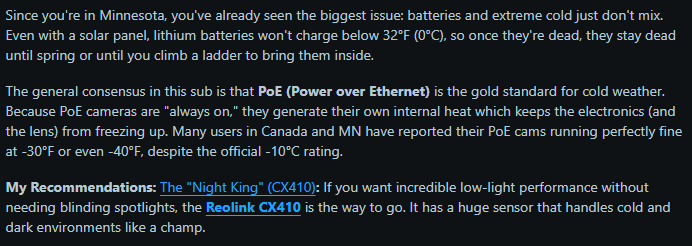
Real-World Community Case Study: For instance, the Reolink CX410 PoE outdoor camera has an official operating rating of -10°C to 55°C . However, real-world user testing in extreme northern climates confirmed continuous, uncompromised 4K performance even at -45°C due to continuous internal power output:
3. Choose the Right Weatherproofing Rating (IP65 vs. IP66 vs. IP67)
Ensure any outdoor cold-weather camera carries at least an IP65 or IP66 ingress protection ratingto prevent melted snow and ice melt from seeping into the casing.
IP65: Protects against dust and low-pressure water jets; sufficient for covered porches, carports, or under soffits.
IP66/IP67: Fully dust-tight and resistant to high-pressure snowstorms, freezing rain, and heavy ice accumulation. Essential for exposed fences, open walls, and un-sheltered mountings.
- Indoor vs. Outdoor Usage: Indoor cameras do not require specialized weatherproofing or low-temperature ratings, as residential home heating maintains ambient temperatures well within standard operating limits.
3 Best Cold Weather Security Cameras for Different Scenarios
To maintain continuous protection during harsh winters, your security setup must handle freezing temperatures, ice accumulation, and long hours of darkness without losing power or video signal. Below are our top scenario-based picks for winter surveillance:
Real-World Winter Performance Test:
Watch a weather-resistant Reolink camera capture footage during a severe winter bomb cyclone:
Top Pick 1. Reolink Altas PT Ultra — Best Wire-Free Camera with Long Winter Battery Life
A 4K wire-free pan-and-tilt camera featuring an ultra-large 20,000mAh battery, engineered to survive sub-zero winter battery drain without frequent recharging.
You need outdoor security for a driveway, backyard, or detached garage where running cables is impossible. Standard battery cameras quickly die in winter freezes, forcing you to take them down in sub-zero weather.
Its massive 20,000mAh internal battery provides continuous power reserves that easily bridge long, overcast winter weeks and sub-zero temperature drops down to -10°C (14°F) or lower. Combined with 360° pan-and-tilt coverage, you can monitor your entire property from a single mount.
Key Features:
-
4K Ultra HD Pan & Tilt: 355° pan and 140° tilt cover all angles in crisp detail.
-
Massive 20,000mAh Battery: High energy density keeps the camera running through extended cold spells.
-
Smart Person/Vehicle/Animal AI: Reduces battery-draining false triggers from blowing snow.
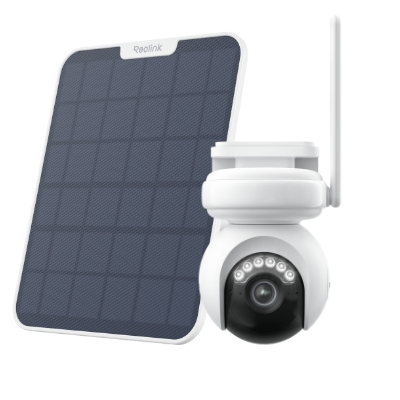
4K Battery-Powered PTZ Camera with Continuous Recording
👍 4K UHD video with continuous recording
👍 ColorX night vision in low light
👍 Pan, tilt, and automatic person tracking
👍 Local storage without monthly fees
Top Pick 2. Reolink CX410 — Best Full-Color Night Vision PoE Camera for Winter Nights
A low-light PoE camera equipped with ColorX technology and an f/1.0 super aperture, delivering full-color night video in pitch darkness without needing harsh spotlights.
Winter brings up to 15+ hours of darkness per day. Traditional infrared cameras show grainy black-and-white video at night, making it difficult to identify intruder clothing colors or vehicle details in dimly lit snowscapes.
Featuring an ultra-large f/1.0 aperture and an advanced 1/1.8" low-light sensor, the CX410 captures vibrant full-color footage under minimal ambient light (down to 0.001 lux). Powered by PoE Ethernet, the steady wired current generates continuous internal operational heat that prevents lens frost and internal freezing.
Key Features:
-
ColorX True Color Night Vision: Full-color imaging in near-total darkness without blinding spotlights.
-
Power over Ethernet (PoE): Single-cable setup delivers power and data stability in sub-zero freezes.
-
IP67 Weatherproofing: Fully sealed metal housing withstands ice storms and driving snow.
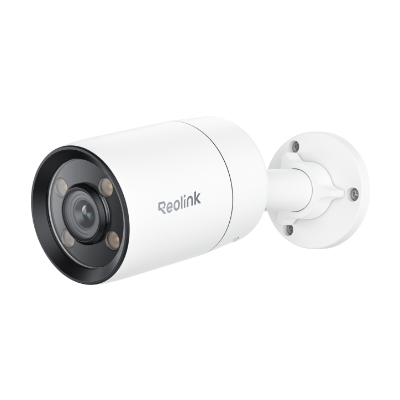
2K PoE ColorX Night Vision Camera
👍 2K 4MP video with image sensor
👍 ColorX night vision with F1.0 aperture
👍 Adjustable warm light
👍 PoE connection for reliable performance
Top Pick 3. Reolink RLK8-810B4-A — Best 4K System for Whole-Home Winter Monitoring
A plug-and-play 4K 8-channel NVR system featuring 4 bullet cameras and a pre-installed 2TB hard drive for 24/7 continuous local recording all winter long.
You manage a residential home or small business and need 24/7 continuous coverage across multiple outdoor angles. You want a hardwired local system that doesn't rely on battery charges or Wi-Fi signals during winter blizzards.
The centralized NVR records non-stop to a local 2TB hard drive with zero monthly fees. The included 4K bullet cameras operate smoothly from -10°C to +55°C (14°F to 131°F), while their continuous PoE power draw maintains internal self-heating to prevent camera freeze-ups.
Key Features:
-
4K 8MP Ultra HD Clarity: Captures sharp face and license plate details against white snow backgrounds.
-
Continuous 24/7 NVR Recording: Pre-installed 2TB HDD retains weeks of video locally.
-
Smart Motion Detection: Filters out falling snow flakes and tree shadows to send accurate alerts.
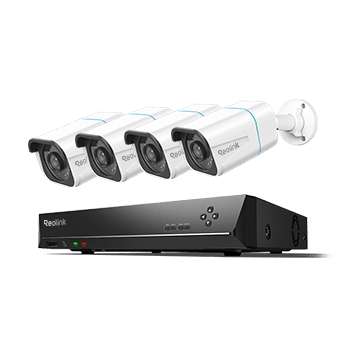
Smart 4K 8-Channel PoE Security System
4 pcs 4K Ultral HD Security Cameras with Person/Vehicle Detection; 2TB HDD 8-Channel NVR for 24/7 Recording; Plug & Play.
Common Mistakes to Avoid When Buying Security Cameras for Cold Weather
Choosing a security camera for cold weather requires more than checking if a camera is weatherproof. Avoid these common mistakes to ensure reliable winter performance:
-
Ignoring battery performance in freezing temperatures: Cold weather can reduce battery life and increase charging frequency. For harsh winters, consider wired PoE cameras or models with better cold-weather power options.
-
Not checking the operating temperature range: A camera that works in mild outdoor conditions may fail in extreme cold. Always check whether the camera can handle your local winter temperatures.
-
Choosing convenience over reliability: Wireless cameras are easy to install, but weak signals and unstable connections can become bigger issues in winter. PoE cameras provide more stable power and connectivity.
-
Overlooking storage options: Cameras relying only on cloud storage may be affected by internet interruptions during winter storms. Local storage options like microSD cards or NVRs provide more reliable access to recordings.
Real-World User Opinions on Outdoor Security Cameras for Cold Weather
Users in cold climates often highlight that battery-powered cameras struggle the most during winter. Common complaints include reduced battery life, charging issues, slow wake-up times, and unreliable connections in freezing temperatures. Many users recommend avoiding battery cameras for extreme cold and choosing wired solutions instead.
PoE cameras are frequently mentioned as a better choice for harsh winter environments because they provide continuous power, faster motion detection, and a stable wired connection. Users with PoE systems reported reliable performance even during severe cold snaps, including temperatures below -30°C. They also prefer setups with NVR compatibility and local storage to avoid relying on cloud services or unstable wireless connections.
For users considering a Reolink system, many recommend powered Reolink cameras such as PoE models and CX-series cameras for cold-weather monitoring. Community members shared positive experiences using Reolink cameras in regions with harsh winters, while also noting that proper installation and weather protection for cables and connections are important for long-term reliability.
Buyer's Decision Guide
How Do You Keep Your Reolink Batteries Charged in Cold Weather?
Reolink camera batteries may show low power in cold weather as low temperatures slow internal chemical reactions.
Reolink battery-powered cameras work between -10°C and +55°C (14°F–131°F), while the Reolink Altas operates down to -20°C (-4°F). The Reolink Solar Panel functions within -10°C to +55°C (14°F–131°F).
For best performance, you may charge batteries at 0°C–45°C (32°F–113°F) and avoid use below -10°C (14°F).
How to keep your batteries charged in cold weather?
If your Reolink camera stops charging because the battery is too cold, move it to a location above freezing and plug it in. Charging will resume automatically once the battery reaches a safe temperature. In areas with frequent subfreezing conditions, you may need to bring cameras indoors to charge more often than during warmer months.
For optimal performance, the Reolink Solar Panel must receive unobstructed sunlight, free from tree shade, buildings, or other obstacles. Its efficiency can drop significantly during extended periods of clouds, rain, or gloomy weather.
FAQs about Cold Weather Security Cameras & Systems
What security camera works best in cold weather?
The best cold weather security camera should have a wide operating temperature range, reliable power, and weather-resistant design. PoE cameras are often ideal for harsh winters because they provide stable power and connection, while cold-rated battery cameras with solar support offer flexible installation.
Does cold weather affect security cameras?
Yes. Freezing temperatures can reduce battery life, cause lens fogging, affect wireless signals, and slow down camera components. Choosing a camera designed for winter conditions helps ensure reliable performance.
What temperature is too cold for cameras?
Most outdoor security cameras work within a rated range of about -10°C to -30°C (14°F to -22°F). When temperatures fall below the limit, battery performance and camera functions may be affected. Always check the camera’s operating temperature rating before buying.
Conclusion
Investing in cold-weather security cameras ensures reliable performance and peace of mind even in the harshest winter conditions. By choosing cameras built to withstand freezing temperatures, protecting them with proper housing, and performing simple maintenance, you can prevent ice, snow, and frost from disrupting your surveillance.
Search
Subscribe for the Latest Updates
Security insights & offers right into your inbox